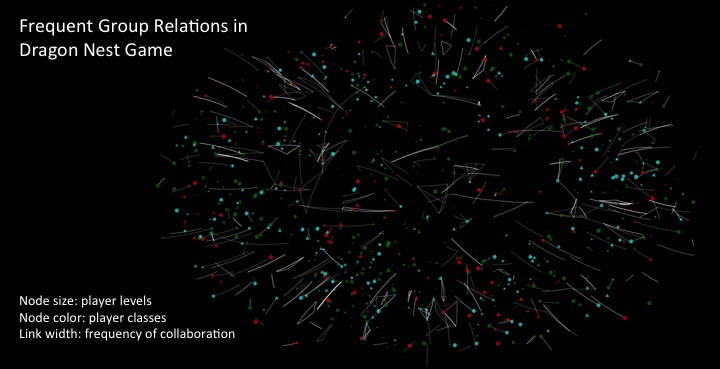
graph2
Prof. Roger Leenders Visit
 Prof. Roger Leenders from the Netherlands is visiting the SONIC lab for the entire Spring Quarter (and a few weeks beyond). Roger Leenders is Professor of Intra-Organizational Networks at Tilburg University. His research mainly focuses on the antecedents and consequences of networks in and of teams. A core research theme is the creativity of teams: what are the network drivers (and inhibitors) of the creative performance of teams?
Before moving to Tilburg, Roger was Professor of Networks in Market and Product Innovation at the University of Groningen. He has a MSc degree in Econometrics and Ph.D. in Sociology (ICS).
Dominic DiFranzo Visit
 Dominic DiFranzo, PhD Student in the Department of Computer Science at the Rensselaer Polytechnic Insititute is visiting the SONIC lab. Dominic works with Prof. James A. Hendler and Prof. Deborah L. McGuinness in the Tetherless World Constellation research group. Dominic’s research focuses on the Semantic Web and Linked Open Data. During his visit Dominic will work on projects related to Virtual Worlds and the Semantic Web.
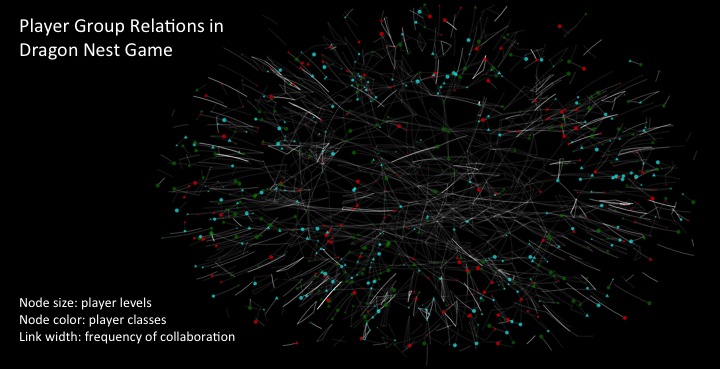
graph1
Eric Berlow: How complexity leads to simplicity
How complexity leads to simplicity
University of California Merced ecologist Eric Berlow says zoom out before you zoom in. 3 minutes!
Les Misérables Co-occurrence
Given that an adjacency matrix is a natural representation of a network, a natural visualization is to show the matrix! Forget the tinker toys, who needs nodes and arcs? Amazing retro network visualization demonstrated using an old war horse sample network and d3.js from Mike Bostock. Check it!
SONIC director to deliver keynote at GWU Crossroads seminar series
Contractor to deliver a keynote titled “Some Assembly Required: Organizing in the 21st Century” on April 5, 2012 as part of the Crossroads Seminar Series at George Washington University. For more information go to http://departments.columbian.gwu.edu/orgsci/newsevents/crossroads
Graphs Beyond the Hairball
By Robert Kosara On
Dual-representation, matrix/node-link diagrams and “node quilts.” Read more…
Julia, I Love You
Julia is a new language for scientific computing that is winning praise from a slew of very smart people … As a language, it has lofty design goals, which, if attained, will make it noticeably superior to Matlab, R and Python for scientific programming. … Remarkably, Julia seems to be on its way to meeting those goals.