Research Lab Manager Position

The SONIC research group and ATLAS laboratory at Northwestern University invite applications for a research lab manager to support lab directors Noshir Contractor (SONIC) and Leslie DeChurch (ATLAS) on administrative and operational aspects of their research portfolios here at Northwestern University – Evanston Campus.

The lab manager will be responsible for supporting a variety of lab operations, including reporting and compliance requirements, communication of findings through digital displays and online materials, and organization and updating of research materials and files. In addition, the lab manager will assist in training new lab members and other research related activities.

Responsibilities:
  • Preparation and submission of grant reports and other administrative documents needed for compliance.
  • Preparation of materials to promote our research on digital displays and lab websites.
  • Regularly update lab databases tracking publications, presentations, personnel, and other information needed for laboratory operations.
  • Oversee IRB procedures and maintain confidentiality of participant information; ensures compliance with institutional, state and federal regulatory policies, procedures, directives and mandates.
  • Miscellaneous laboratory management tasks such as ordering supplies and maintaining equipment.
Required Competencies:
  • Strong project management skills with exceptional attention to detail.
  • Excellent written and verbal communication skills.
  • Outstanding interpersonal skills and ability to maintain positive relationships with various stakeholders.
  • Strong time management skills with a proven ability to multitask and to prioritize activities to successfully complete projects on tight deadlines with little supervision.
  • Knowledge of Microsoft Office, Dropbox, and Google Drive required.
  • Willingness to learn scientific formatting requirements (e.g., APA format) in preparing research materials.
  • Ability to work independently and as part of a team.
Education and Experience:
  • Bachelor’s degree required, preferably in Communication, Psychology, Sociology, Business, Industrial Engineering, or a social science field.
  • Experience in an interdisciplinary research environment preferred.
  • Experience with IRB or grant-writing preferred.

Applicants should send a cover letter, resume, and three references (i.e., contact details) to Brent Hoagland (brent.hoagland@northwestern.edu). Additionally, Northwestern University will have a formal application process.
Continue Reading

Contractor presents at Network Science Institute, Boston – “People Analytics: Understanding and Enabling the Future of Work.”

To bring the performance of people analytics up—and in line with the hype— organizations need to do more than analyze data on demographic attributes.  They need to employ relational analytics, which examines data on how people interact, to identify “high potentials,” who has good ideas, who is influential, what teams will get work done on time, and more. Companies can mine their “digital exhaust”—data created by employees every day in their digital transactions, such as e‐mails, chats, “likes,” “follows,” @mentions, and file collaboration—for insights into their workforce. Drawing from our ongoing research on space missions, as well as from a large body of other scholars’ research, we identify structural signatures to help organizations address challenges they face with issues such as team conflict, team assembly, diversity and inclusion, succession planning, team assembly, and post-merger integration.

Website: https://www.networkscienceinstitute.org/events/noshir-contractor

Citation: Contractor, N. (2019, April). People Analytics: Understanding and Enabling the Future of Work. Speaker at Northeastern University’s Network Science Institute, Boston, MA.

Continue Reading

Networks in the News – Simple vs. Complex Secrets

A recent American Journal of Sociology article by Georg Rilinger develops a relational theory of complex secrets which explains how corporate crimes often remain secrets even after the fact that critical information has been revealed. The author argues that this type of secrets (i.e., complex secrets) is not enough to be identified secrets as “things,” compared to simple secrets (i.e., discovering a fact reveals a secret). Rather, it requires those who discover secrets to (a) find whole sets of information and then (b) assemble them properly based on a guiding conception. The author demonstrated the case of complex secrets using the Insull’s Ponzi scheme in the 1920s and 1930s. In particular, in this scandal, there were four FTC investigations and early ones failed. The author illustrated that despite the fact that all the investigations had the same sets of information, the early ones relied on a misguided conception, which prevented them from successfully discovering the complex secrets.

If you’re interested in the article, go visit: https://www.journals.uchicago.edu/doi/abs/10.1086/702730

Continue Reading

SONIC Speaker Series presents: Jake Fisher

The SONIC Speaker Series presents

Jake Fisher

Survey Research Center at the University of Michigan’s Institute for Social Research

Social Space Diffusion: Applications of a Latent Space Model to Diffusion with Uncertain Ties

SONIC Lab is proud to welcome Dr. Jake Fisher of the University of Michigan. He will speak on Monday, April 15th, 2019 at 10 am in Frances Searle Building, SONIC Conference Room 1-459. Please contact Brent Hoagland with any questions.

Abstract:

Social networks represent two different facets of social life: (1) stable paths for diffusion, or the spread of something through a connected population, and (2) random draws from an underlying social space, which indicate the relative positions of the people in the network to one another. The dual nature of networks creates a challenge: if the observed network ties are a single random draw, is it realistic to expect that diffusion only follows the observed network ties? This study takes a first step toward integrating these two perspectives by introducing a social space diffusion model. In the model, network ties indicate positions in social space, and diffusion occurs proportionally to distance in social space. Practically, the simulation occurs in two parts. First, positions are estimated using a statistical model (in this example, a latent space model). Then, second, the predicted probabilities of a tie from that model—representing the distances in social space—or a series of networks drawn from those probabilities—representing routine churn in the network—are used as weights in a weighted averaging framework. Using longitudinal data from high school friendship networks, the author explores the properties of the model. The author shows that the model produces smoothed diffusion results, which predict attitudes in future waves 10 percent better than a diffusion model using the observed network and up to 5 percent better than diffusion models using alternative, non-model-based smoothing approaches.

The forthcoming paper is available online at: https://doi.org/10.1177%2F0081175018820075

Jacob C. Fisher is a research investigator in the Survey Research Center at the University of Michigan’s Institute for Social Research. His research focuses on developing and testing better network diffusion models, to understand how ideas, innovations, and information spreading through a group of people help to create and maintain a common culture over time.  He obtained his doctorate in sociology and his master’s in statistical science from Duke University.   His work has appeared in Sociological Methodology, Network Science, Social Currents, and other venues.
Continue Reading

Noshir Contractor presented at Management Science Workshop 2019 in Santa Cruz, Chile

Professor Contractor presented, “Using optimization methods to benchmark performance in space teams” at Management Science Workshop 2019 in Santa Cruz, Chile.

The presentation was about providing a performance measurement method based on optimization techniques for Multi-Team Systems (MTS). The method is tested on an MTS for Project RED -a project funded by the National Aeronautics and Space Administration (NASA). The main goal of the MTS is planning the development of a water well to support a human colony on Mars.

This workshop is sponsored by the Department of Industrial Engineering, Universidad de Chile and Complex Engineering Systems Institute. The workshop was successful in bringing together researchers and innovators from many leading universities and business schools such as MIT, Management Sloan School, U.C Berkeley, Northwestern, Yale University, etc. to connect, meet and establish channels for collaboration.

Citation: Izadinia, N., DeChurch, L., Contractor, N., & Waechter, A. (2019, January). Introducing a measure for calculating the efficiency of work in space. Paper presented at 2019 Management Science Workshop, Santa Cruz, Chile.

Acknowledgment: This research is funded by the National Aeronautics and Space Administration (NASA), Award number NNX15AK73G

Continue Reading

SONIC Speaker Series presents: Anirban Mukherjee

The SONIC Speaker Series presents

Anirban Mukherjee

Marketing Faculty at INSEAD

Investigating the Multiple-Source Effect in Product-Pitch Videos

SONIC Lab is proud to welcome Prof. Mukherjee of INSEAD. He will speak on Tuesday, April 2nd, 2019 at 11 aM in Frances Searle Building, Room 1-483. Please contact Brent Hoagland with any questions.

Abstract:

Conventional wisdom suggests that having multiple speakers (“sources”) deliver content enhances persuasion. Laboratory evidence confirms the folk knowledge and terms it the “multiple-source effect.” As the prior evidence was developed in the behavioral laboratory, it derives from relatively simple laboratory stimuli conveying information on far fewer topics than is typical in the real-world marketplace. Our study addresses this limitation. We investigate the multiple-source effect in all (more than 30,000) product-pitch videos in nine product-innovation-related categories on Kickstarter, an online crowdfunding portal, since its inception in April 2009 to mid-February 2017. We use deep-learning models to algorithmically measure the number of speakers, transcribe and analyze the spoken content, and measure other audial and visual control variables. We document a novel boundary condition of the multiple-source effect—the effect depends on the number of topics discussed in the video. In simpler videos discussing fewer topics, which is more similar to stimuli in prior laboratory studies, we corroborate prior findings that having more speakers leads to more funding. However, in more complex videos discussing more topics, we find that having more speakers does not affect funding. The latter is consistent with the literature on information overload. More broadly, our research demonstrates the potential of deep learning to enable the analysis of large-scale audio and video data in order to investigate human behavior in real-world settings.

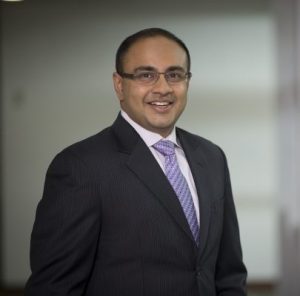
Prof. Mukherjee is Visiting Assistant Professor of Marketing at INSEAD and Fellow of the Institute on Asian Consumer Insight at Nanyang Technological University. Prior to INSEAD, Prof. Mukherjee was Assistant Professor of Marketing at the Lee Kong Chian School of Business at Singapore Management University. He holds a B.Sc. in Electrical and Computer Engineering (2003), and a M.Sc. and Ph.D. in Marketing (2008, 2009), from Cornell University. He studied at The Doon School, Dehra Dun (353 KA, 1999).

Prof. Mukherjee is an expert in quantitative and computational marketing methodology. He develops and applies cutting-edge methods to managerially and substantively important marketing phenomena. His work has been published in prestigious journals (such as the Journal of Marketing Research, Journal of Retailing, and Management Science), featured in popular press outlets (including Forbes), and received several awards (including several best paper awards). He has been invited to give research talks at numerous prestigious universities and he consults and teaches for several major companies (such as IBM, LinkedIn, and Sony).
Continue Reading

Watch our most recent SONIC Speaker – @gvegayon

The SONIC Speaker Series presents

George G. Vega Yon

Department of Preventive Medicine at USC’s Keck School of Medicine

Big Problems for Small Networks: Statistical Analysis of Small Networks and Team Performance

SONIC Lab is proud to welcome George G. Vega Yon of USC’s Keck School of Medicine. George will speak on Wednesday, March 20th, 2019 at 2PM in Frances Searle Building, Room 1-483 with a workshop to follow. Please contact Brent Hoagland with any questions.


Abstract:

Small network data such as team, family, or personal networks, is common in many fields that study social networks. Although the analysis of small networks may appear simplistic relative to the difficulties posed by “big” datasets, there are at least two key challenges: (1) fitting statistical models to explain the network structure in small groups, and (2) testing if structural properties of small networks are associated with group-level outcomes; for example, team performance. In this presentation, we introduce two new statistical methods that use a revisited version of Exponential Random Graph Models (ERGMs) in the context of small networks. Using exhaustive enumeration of networks in the support, we are able to calculate exact likelihood functions for ERGMs, which allows us to obtain maximum likelihood estimates directly (without using simulations), avoiding common problems that arise from methods that rely on approximations instead. This is joint work with Prof. Kayla de la Haye (USC).

A workshop on the R packages ergmito and gnet for applying the methods introduced during the talk will be conducted.

George G. Vega Yon is a Biostatistics Ph.D student and Research Programmer in the Department of Preventive Medicine at USC’s Keck School of Medicine. His interests are in computational statistics and scientific software development. Most recently, his research has focused on the development of statistical methods for both phylogenetics and social network analysis. He holds a MS degree in Economics from Caltech, and a MA in Economics and Public Policy from Universidad Adolfo Ibáñez, Chile.

Continue Reading

Large teams develop and small teams disrupt science and technology

A research article by Lingfei Wu, Dashun Wang, and James A. Evans.

One of the most universal trends in science and technology today is the growth of large teams in all areas, as solitary researchers and small teams diminish in prevalence. Increases in team size have been attributed to the specialization of scientific activities3, improvements in communication technology, or the complexity of modern problems that require interdisciplinary solutions. This shift in team size raises the question of whether and how the character of the science and technology produced by large teams differs from that of small teams. Here we analyse more than 65 million papers, patents and software products that span the period 1954–2014, and demonstrate that across this period smaller teams have tended to disrupt science and technology with new ideas and opportunities, whereas larger teams have tended to develop existing ones. Work from larger teams builds on more-recent and popular developments, and attention to their work comes immediately. By contrast, contributions by smaller teams search more deeply into the past, are viewed as disruptive to science and technology and succeed further into the future—if at all. Observed differences between small and large teams are magnified for higher-impact work, with small teams known for disruptive work and large teams for developing work. Differences in topic and research design account for a small part of the relationship between team size and disruption; most of the effect occurs at the level of the individual, as people move between smaller and larger teams. These results demonstrate that both small and large teams are essential to a flourishing ecology of science and technology, and suggest that, to achieve this, science policies should aim to support a diversity of team sizes.

Link: https://www.nature.com/articles/s41586-019-0941-9

Continue Reading