 Lab Director Noshir Contractor presented his lecture “Leveraging Network Science to Address Grand Societal Challenges” on Jan. 15th, 2016 at the University of Michigan, Ann Arbor, sponsored jointly by the Interdisciplinary Committee on Organizational Studies (ICOS) and the Digital Future Lecture Series. Using examples of his research in the area of networks, Noshir illustrated how Network Science is fundamental to unleashing the intellectual insights locked in big data. Specifically, he discussed how these insights offer social scientists in general, and social network scholars in particular, an unprecedented opportunity to engage more actively in monitoring, anticipating and designing interventions to address grand societal challenges.
“Social networks as important as exercise and diet across the span of our lives”
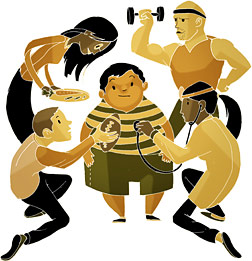 The more social ties people have at an early age, the better their health is at the beginnings and ends of their lives, according to a new study from the University of North Carolina at Chapel Hill. The study is the first to definitively link social relationships with concrete measures of physical wellbeing such as abdominal obesity, inflammation, and high blood pressure, all of which can lead to long-term health problems, including heart disease, stroke and cancer.
Read the full article here: http://uncnews.unc.edu/2016/01/04/social-networks-as-important-as-exercise-and-diet-across-the-span-of-our-lives/
“Mapping cancer’s ‘social networks’ opens new approaches to treatment”
 Scientists at The Institute of Cancer Research(link is external), London, compared proteins inside cells to members of an enormous social network, mapping the ways they interact. This allowed them to predict which proteins will be most effectively targeted with drugs.The team found that there are many molecular pathways that interact to affect the development of cancer. Cancer-causing proteins that have already been successfully targeted with drugs tended to have particular ‘social’ characteristics that differ from non-cancer proteins.
Read the full article here: http://www.cancerresearchuk.org/about-us/cancer-news/press-release/2015-12-23-mapping-cancers-social-networks-opens-new-approaches-to-treatment
“Like air traffic, information flows through major neuron ‘hubs’ in the brain, IU scientists find”
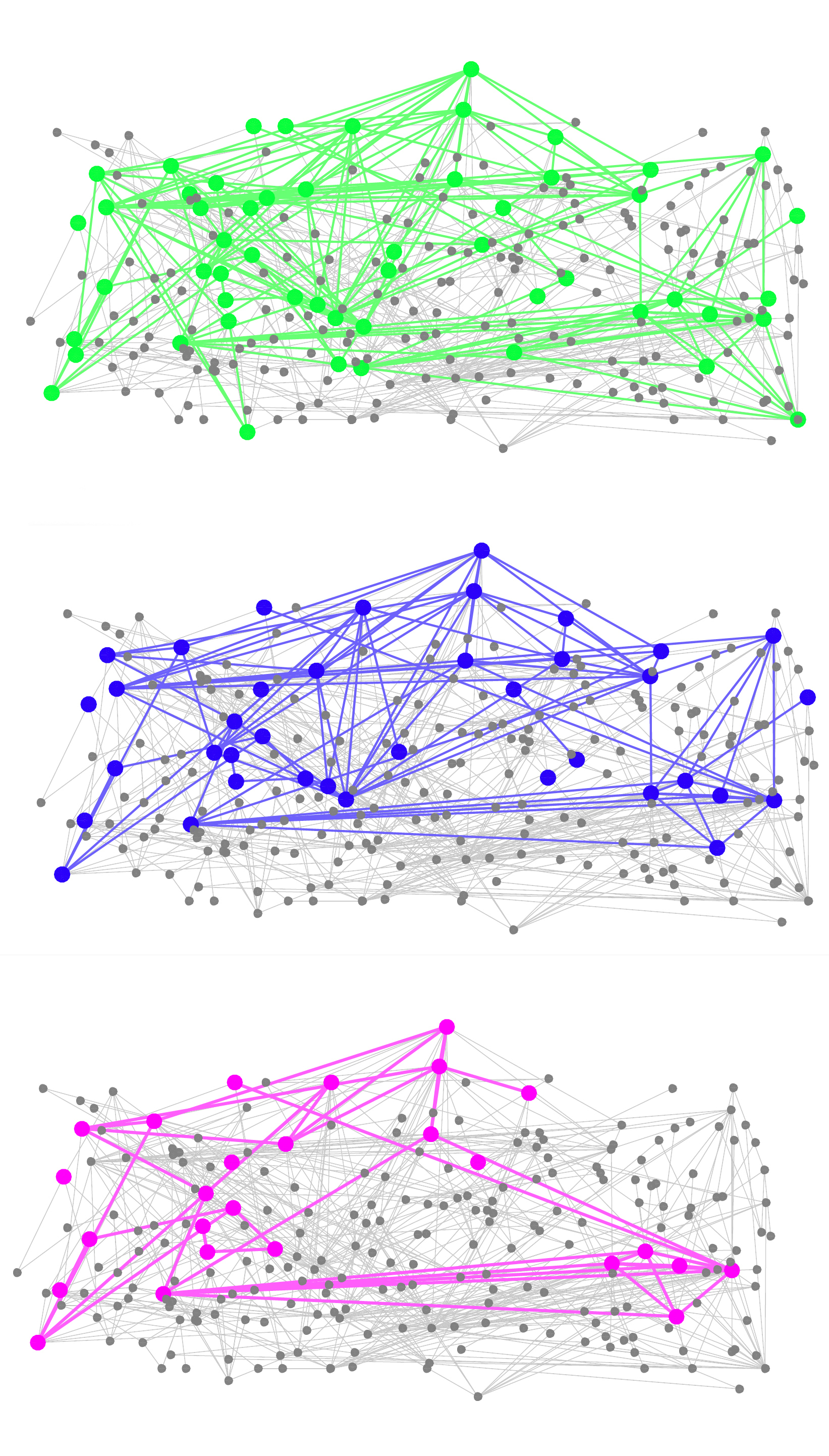
This article published by Indiana University Bloomington describes a new study one of its researchers has published in the journal Neuroscience, drawing a close analogy between airline routes and the neuronal network in our brain.
XXXXX
Read the full article here: http://news.indiana.edu/
Co-PI Suzanne Bell Profiled by Glamour Magazine
 Glamour Magazine profiles CREWS Grant collaborator Suzanne Bell and a number of other female professionals contributing to NASA’s upcoming Mars Mission in the article “Would You Go to Mars? Meet the Four Women Astronauts Who Can’t Wait to Go”. Read the full article here: http://www.glamour.com/inspired/2016/01/nasa-women-astronauts-first-trip-to-mars
“First, Let’s Get Rid of All the Bosses”
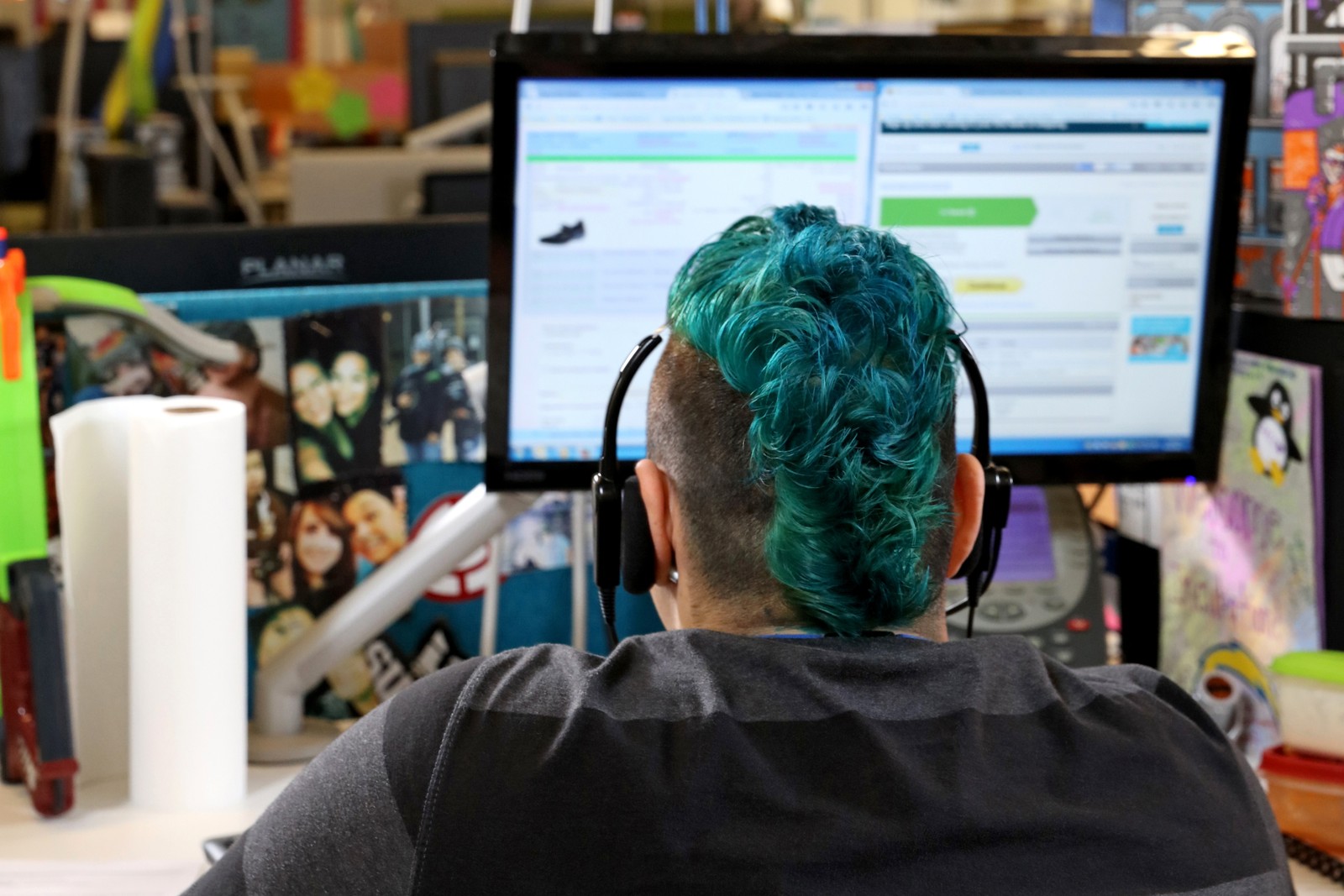 Rodger D. Hodge of the New Republic reports on CEO Tony Hsieh’s recent decision to shift Zappo’s to the Evolutionary Teal style of management through Holacracy. This hotly discussed new approach discards static, hierarchical power structures for more distributed and plastic forms of leadership. As defined by Frederic Laloux in Reinventing Organizations, Evolutionary Teal organizations “trust in the abundance of life” and focus on self-actualization rather than material goals. This means something different to every organization and Zappo’s implementation came with a wave of controversial new policies. The sudden and radical switch was received with mixed reviews from within and without. The jury is still out on whether Hsieh’s move represents a meaningful reform or is simply another flash in the pan of the avant-garde corporate.
Read the full article here: https://newrepublic.com/article/122965/can-billion-dollar-corporation-zappos-be-self-organized
“Links that speak: The global language network and its association with global fame”
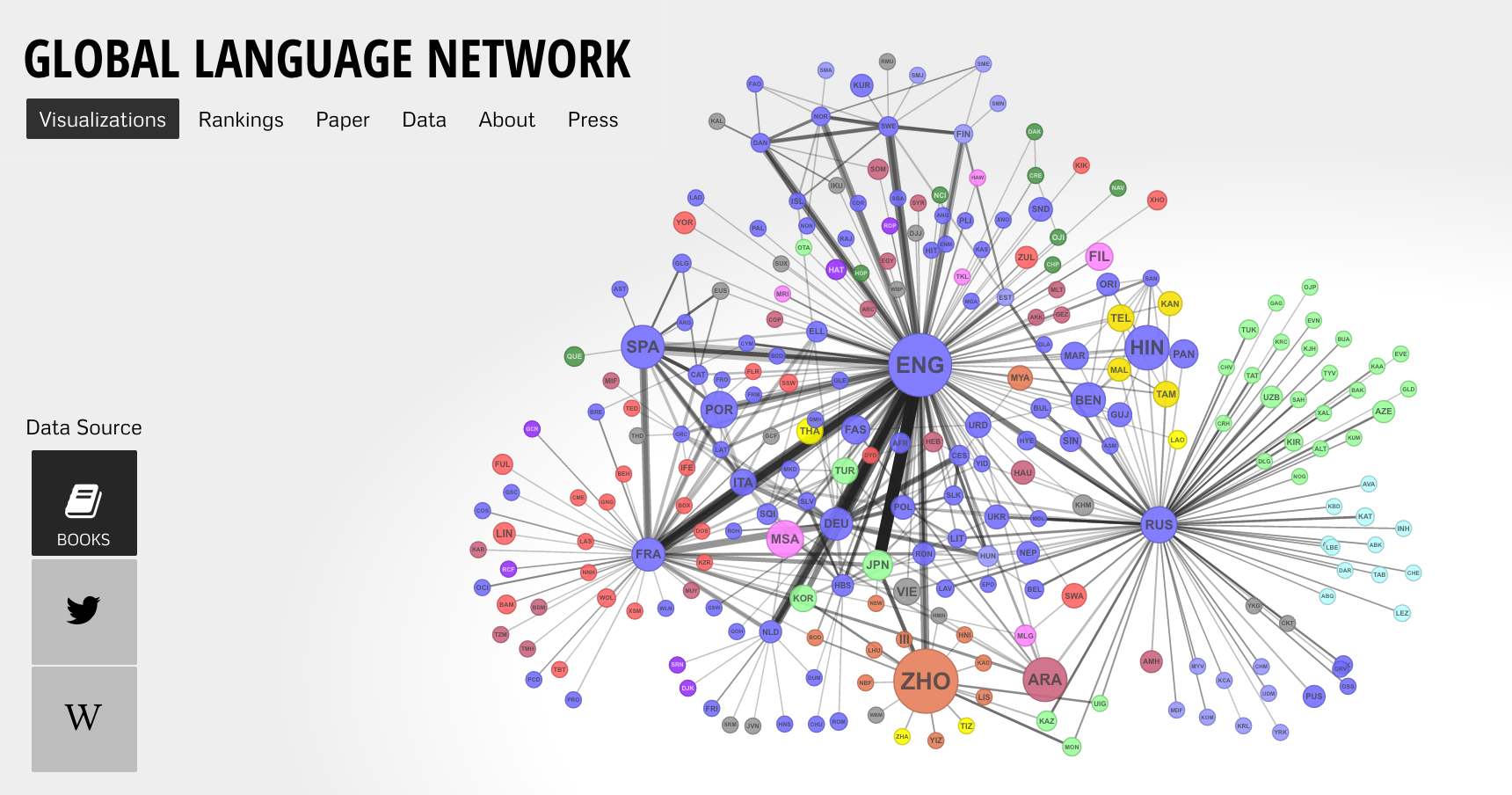 In an article recently published by PNAS, Shahar Ronen et al. “introduce a metric of a language’s global influence based on its position in the network” of co-spoken languages. They show that the “connectivity of a language in this network … remains a strong predictor of a language’s influence”. In other words the more likely a language is to show up on a polyglot’s resume, the more influential it is. The authors provide a super cool user-friendly web-based visualization tool to explore the data!
Read the full article here: http://www.pnas.org/content/111/52/E5616.abstract
Check out the super cool interactive language mapping tool here: http://language.media.mit.edu/visualizations/books
“Pumpkin Pie in Miami: Thanksgiving Flight Patterns”
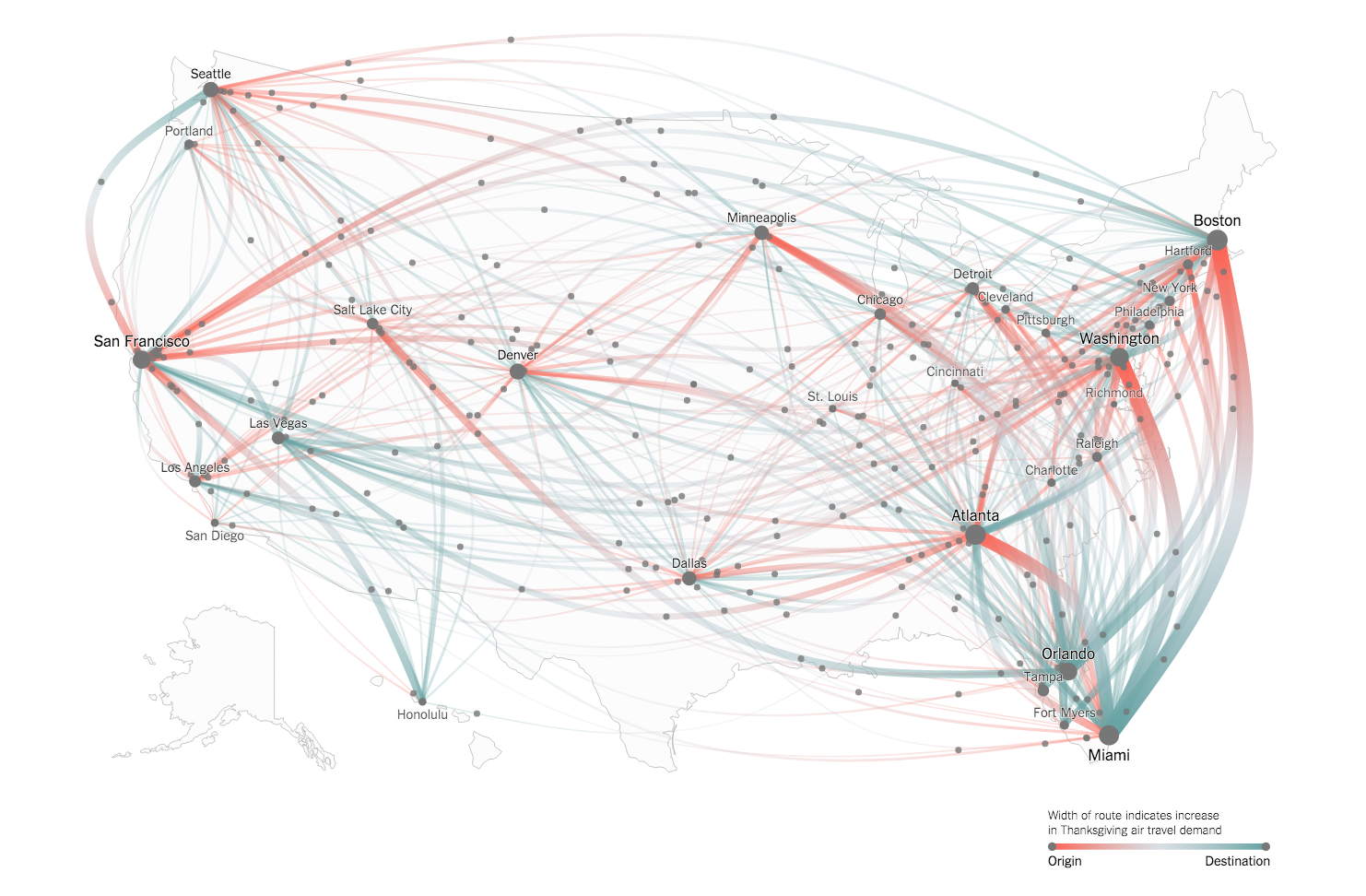
How was your holiday travel? A recent New York Times article “Pumpkin Pie in Miami” shows flight pattern networks in the US over thanksgiving holiday, using search data from Google Flights revealing the movements of over 3.6 million Americans during the Thanksgiving holiday. The takeaway: Americans fly warm and late. An overwhelming number of travelers chose destinations like Miami or Las Vegas and flight volume peaked at noon on Thanksgiving Day!
To see how popular our destination was, check out the original article here: http://www.nytimes.com/interactive/2015/11/24/upshot/thanksgiving-flight-patterns.html?hp&action=click&pgtype=Homepage&clickSource=story-heading&module=second-column-region®ion=top-news&WT.nav=top-news&_r=1
Noshir Presents “Some Assembly Required” for University of Florida’s CTSI Team Science Talks
Lab Director Noshir Contractor presented his lecture “Some Assembly Required: Organizing in the 21st Century” on Oct. 26, 2015 for the Clinical and Translational Science Institute’s Team Science Talks at the University of Florida. His talk illustrated how comprehensive digital trace data provide an unprecedented exploratorium to model the socio-technical motivations for creating, maintaining, dissolving, and reconstituting into teams – arguing that Network Science is foundational in advancing our understanding of effective team emergence and that these insights are building a new generation of recommender systems that leverage our research insights on the socio-technical motivations for creating ties.
Noshir Contractor Presents Invited Lecture on Leveraging Computational Social Science at Syracuse University
Lab Director Noshir Contractor presented a Kameshwar C. Wali Lecture in the Sciences & Humanities on September 24th, 2015 at Syracuse University. His talk, entitled “Leveraging Computational Social Science to Address Grand Societal Challenges” argues that computational social science is the foundation on which to unleash intellectual insights locked in big data, illustrating how these insights offer scientists and scholars an unprecedented opportunity to engage more actively in monitoring, anticipating, and designing interventions to address grand societal challenges.