Noshir presents keynote at Connected Commons

Describing how organizations can mine their “digital exhaust” to address critical HR challenges, Noshir Contractor recently presented keynote “Understanding & Enabling The  Future of Work” at The Connected Commons’s Fall Summit. The Connected Commons is a consortium of diverse organizations co-managed by Rob Cross and i4cp.

For more details, please refer to the agenda:
10-19_CC_Summit_Agenda

Continue Reading

SONIC at OCMC 2019: Highlights

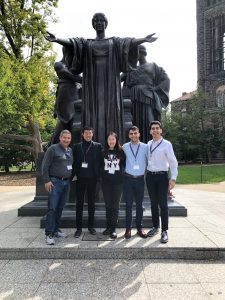
SONIC had the pleasure to attend OCMC 2019 at University of Illinois. Below are a few highlights:

Left to Right: Noshir, Kyosuke, Yuanxin, Rustom, Diego
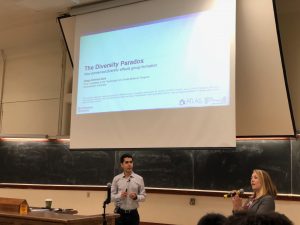
Diego presenting his research, “The Diversity Paradox”
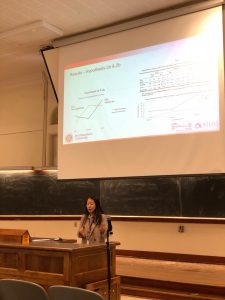
Yuanxin presenting her research related to enterprise social media.
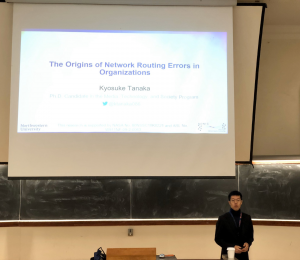
Kyosuke presented his research “The Origins of Network Routing Errors in Organizations”
Continue Reading

Congrats, and good luck, Rustom!

SONIC is delighted to introduce Rustom Ichhaporia, who is a senior at Illinois Mathematics and Science Academy, Aurora (IMSA).

This summer, we were proud to host Rustom Ichhaporia as a research intern working on the My Dream Team project. While the internship has ended, we would  like to extend the biggest congratulations to him, who recently presented at OCMC 2019, and has his paper accepted at the 8th International Conference on Complex Networks and their Applications happening in Lisbon, Portugal!

Rustom’s internship focused on studying how traits and social networks influence team formation. Driven by his passion for teams and statistical analysis, he enjoyed learning multiple social network analysis methods and participated in a research project. During the summer, Rustom organized, analyzed, and described datasets using the R package statnet. He used Exponential Random Graph Models to study the factors that are most likely to explain the selection, acceptance, and rejection of invitations in self-assembling teams.

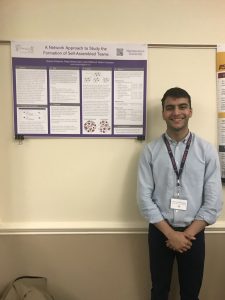
Rustom and his poster “A Network Approach to Study the Formation of Self-Assembled Teams”

Based on his analysis, he wrote a paper with Diego Gómez-Zará, a PhD student at SONIC, describing the findings of this research study. The paper has been accepted to the 8th International Conference on Complex Networks and their Applications to be held in December 2019 in Lisbon. During his time at SONIC, Rustom demonstrated his analytic skills, critical thinking, perseverance, and determination to conduct research projects, all qualities that will make him outstanding as a data scientist.

The SONIC Lab thanks Rustom for all of his hard work this summer, and wishes him luck in his future studies!

Continue Reading

SONIC Speaker Series Presents: Hank Green

Video now availabe on Youtube: https://youtu.be/I9XBbr2ctpM

SONIC  is proud to welcome Dr. Hank Green of Indiana University. He will speak on Wednesday, Nov 6th  at 10:30 am in Frances Searle Building, Room 3-417. Please contact Carmen Chan with any questions.

Hank Green
Associate Professor

Department of Applied Health Science, Indiana University School of Public Health

Indiana University Network Science Institute


Network-based Strategies for Improving PrEP Availability Among those at High Risk forHIV

Pharmaceutical Pre-Exposure Prophylaxis (PrEP) has been proven effective against HIV infection, but it is underutilized as an HIV prevention strategy in part due to a lack of familiarity with PrEP treatment regimes among healthcare providers that serve the most at risk communities.  Lack of healthcare provider knowledge has been identified as a substantial contributor to the continuing increase of HIV infections among sexual and gender minority patients. An Institute of Medicine report states, “few physicians are knowledgeable about or sensitive to lesbian, gay, bisexual, and transgender (LGBT) health risks or needs.” Nevertheless, physicians often serve as key points of access for this preventive treatment among minority patients who may not know the full range of prevention options. Thus, physicians’ lack of knowledge is likely to limit the highest risk patients’ awareness of, screening for, and access to PrEP. In this study, we propose to develop network-based strategies that help identify physicians who serve populations at high risk for HIV but who prescribe PrEP infrequently and those physicians likely to influence the prescribing behavior of their peers, facilitating the dissemination of information about PrEP via strategically targeted information campaigns.

Physician networks inferred from medical claims data protect patient identities but enable insights into the numbers and kinds of patients shared by physicians across the country and approximate the structure of physicians’ professional communication networks. Prior research has shown that physician networks inferred from shared patients are strongly predictive of the diffusion of shared medical practices. Medical knowledge is exchanged among physicians who share patients with one another because they often go to each other for advice about new treatments, difficult cases, etc. Medical claims data can provide more reliable information than data provided by physician surveys because the latter typically exhibit low response rates and a high likelihood of nonresponse bias. Additionally, acquiring a complete national set of medical claims is affordable whereas acquiring a set of complete national physician surveys would be prohibitively expensive.

Using national-scale claims data and the network generated from them, we tested hypotheses that ask whether PrEP prescribing behavior in physician sub-communities varies based on the whether a physician 1) is or has close ties to an infectious disease specialist, 2) shares patients with PrEP prescribing physicians, 3) shares patients with a doctor that treats a high proportion of HIV patients, 4) treats patients covered by specific insurance providers. While testing these and other hypotheses, we will account for contextual and geographic factors including location of providers in states with high incidence of HIV or in regions with high stigma against MSM. Understanding which of these network features may be associated with knowledge of and prescription of PreP will lead to new strategies that identify doctors who may be most influenced to begin or increase their recommendation of PrEP or who are positioned to shape the PrEP prescribing behavior of their peers, ultimately increasing its utilization among those at risk for HIV. The strategy, while focused here on PrEP, is broadly generalizable for any innovation in medical care that would benefit from a more targeted approach. This study has 3 aims:

Aim 1. Construct a physician-to-physician network relevant to the population indicated for PrEP. We used aggregated medical claims from both private and public payers to create a physician-to-physician network using standard network approaches. The data included all claims for patients being treated with drugs uniquely prescribed for STIs such as HIV and genital herpes, establishing a baseline of shared patients representative of the population indicated for PrEP.

Aim 2. Test alternative hypotheses for processes that may drive PrEP prescription rates. We used information about the distribution of PrEP prescribing in this network to assess the relative contribution of 1) social influence 2) differential awareness of PrEP, 3) geographic variation related to features of the HIV epidemic (such as stigma), and 4) other network based features such as clustering to prescription rates while controlling for factors such as the rural or urban location of a doctor.

Aim 3. We will use the structure of the physician network developed in Aim 1 and the results of our analyses in Aim 2 to identify targets for a strategic information campaign.  We will generate a series of rules that identify physician characteristics associated with being an appropriate target and an appropriate peer change agent. Then, based on those rules we will simulate the diffusion of PrEP information and PrEP prescribing behavior in the network we generated in Aim 1. We will also contact a small set of targets and change agents to assess the accuracy of our rules and determine the opinions of these physicans regarding the broader utility of such targeted campaigns for increasing PrEP prescribing, fundamentally affecting the PrEP care cascade.

To learn more about the speaker, please visit: https://publichealth.indiana.edu/research/faculty-directory/profile.html?user=hdgreen

Continue Reading

Noshir at DC holding a public discussion for SBS research to promote interdisciplinary collaboration

Today, the National Academies of Sciences, Engineering, and Medicine is holding a public discussion of a new report, A Decadal Survey of the Social and Behavioral Sciences: A Research Agenda for Advancing Intelligence Analysis. This decadal survey, the first undertaken in the SBS domains, uncovered new prospects for SBS research and ways to promote interdisciplinary collaboration. The report provides guidance for the development of a 10-year research agenda and identifies key opportunities for SBS research to strengthen intelligence analysis with research directions in areas for improving sensemaking, social cybersecurity, human-machine teaming, and the future analytic workforce.

Noshir Contractor, along with other members of the decadal survey committee and representatives from the federal government and research organizations, are at DC to discuss findings and recommendations from the report as well as next steps to make progress in SBS research and collaboration between research communities and the IC.

Event details: https://www.eventbrite.com/e/sbs-decadal-survey-report-launch-tickets-67200964895

Agenda: https://sites.nationalacademies.org/cs/groups/dbassesite/documents/webpage/dbasse_195500.pdf

Continue Reading

Welcome, Jasmine and Carmen!

To kick-off the new school year, SONIC is excited to introduce our two new SONIC members, Jasmine and Carmen. Jasmine is joining SONIC as a first-year Ph.D. student in Media, Technology, and Society (MTS) whereas Carmen is joining SONIC as a lab manager.

Jasmine (Yutong) Wu is a first-year Ph.D. student in Media, Technology, and Society (MTS). She graduated from Cornell University with a B.S. in Information Science and Communication. Her research interests include social network analysis, teamwork, and intergroup bias. Jasmine is excited to apply advanced computational tools to understand team processes in research and industrial settings to further improve management and team performance. In SONIC, she will work on the Enterprise Social Media and Scientific Workforce projects. Outside of work, she enjoys running, swimming, photography, and exploring theaters and art museums in Chicagoland.

Carmen Chan holds a B.S. with Distinction in Research in Communication from Cornell University. She is interested in the intersection of social media, mental health, and interpersonal communication, and is excited to learn ways to apply a social network perspective to further examine online social support for mental health. She will serve as a project manager for the enterprise social media project and support ongoing research at SONIC. Outside of work, she enjoys reading, fashion, going to museums, and exploring coffee shops and brunch places!

Fun fact: Jasmine and Carmen worked at the same research labs (Cornell Group and Interpersonal Communication Lab & Cornell Virtual Embodiment Lab) during undergrad and walked together during graduation! They’re thankful for the opportunity to work with each other again and are already making plans to explore Chicago together!

We would also like to especially wish our SONIC alumni the best of luck with their new careers! Brent Hoagland, former lab manager, is joining Rutgers University as a first year PhD student in Sociology. Marlon Twyman II, graduated in June, is joining the University of Southern California Annenberg School for Communication and Journalism as an assistant professor. Michael Schultz, former postdoctoral fellow, is joining Indiana University as an assistant professor at the Department of Sociology. We’ll miss them!

Continue Reading

Contractor joined Santa Fe Institute 2019 ACtioN Topical Meeting on the Complexity of Commerce

Yesterday, Noshir Contractor was invited to join the SFI ACtionN roundtable in a special ACtioN roundtable discussion on the Complexity of Commerce. He led discussion on one of the four primary pastures – Employee Networks and Retail Management. Details on the meeting and ideas discussed can be found here: https://santafe.edu/events/complexity-commerce


Continue Reading

Contractor delivered keynote at 2019 International Conference of Social Computing in Beijing

Organized by the Center for Network Research and the Institute for Data Science at Tsung Hua University, The 2019 International Conference of Social Computing took place at Tsing Hua in Beijing, China, at Tsing Hua University. With the goals of exploring interdisciplinary methodological approaches for studying social networks in big data, as well as fostering discipline integration and innovation, the conference invited scholars around the globe to exchange and bridge ideas in modern technology, social science, and humanities.

Lab director, Noshir Contractor, was invited to give a keynote on the topic “Understanding and Enabling the Future of Work.” Other presenters include Charles Edward Catlett, senior computer scientist at the U.S. Department of Energy’s Argonne National Laboratory and a Senior Fellow at the University of Chicago’s Mansueto Institute for Urban Innovation, Yang Chen, Associate Professor at Fudan University, James A. Evans, Professor at The University of Chicago, and more.


Continue Reading

Kyosuke passing dissertation prospectus & paper acceptance at the journal of Applied Network Science

Last Friday was a big day for Kyosuke Tanaka, PhD candidate in the Media, Technology, and Society (MTS) Program.

His paper with Dr. Agnes Horvat , “(Un)intended Consequences of Networking in Individual and Network-level Efficiency,” has been accepted for publication in Applied Network Science. In their work, they looked into the differential effects of structural and frequency change on the efficiency of information flow through a network.  Whereas existing literature has focused predominantly on structural change, that is, the addition and deletion of communication ties, their research also pointed to an understudied aspect of personal networking: frequency change (the increase or decrease of communication on existing ties). To study these effects, they conducted simulations of networking approaches on a diverse set of real-world directed weighted communication networks and contributed their findings. Currently, the publication is in press. We will share the link it once it is published.

On the same day, Kyosuke also successfully passed his dissertation prospectus! His proposed title is Toward Understanding Human Information Routing in Communication Networks. His committee members are Drs. Noshir Contractor (advisor), Leslie DeChurch, and Agnes Horvat from Northwestern University, and Dr. Matthew Brashears from University of South Carolina.

Double congratulations to Kyosuke, and we look forward to seeing his dissertation coming along!

Left to Right: Dr. Agnes Horvat, Dr. Leslie DeChurch, Kyosuke Tanaka, Dr. Noshir Contractor.

Continue Reading