
SONIC Speaker Series presents: George G. Vega Yon

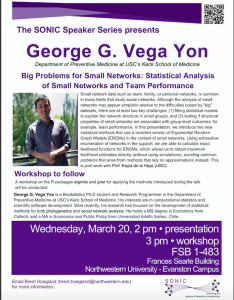
The SONIC Speaker Series presents

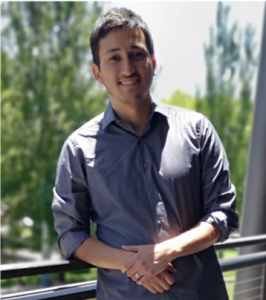
George G. Vega Yon

Department of Preventive Medicine at USC’s Keck School of Medicine

Big Problems for Small Networks: Statistical Analysis of Small Networks and Team Performance

SONIC Lab is proud to welcome George G. Vega Yon of USC’s Keck School of Medicine. George will speak on Wednesday, March 20th, 2019 at 2PM in Frances Searle Building, Room 1-483 with a workshop to follow. Please contact Brent Hoagland with any questions.
 

Abstract:

Small network data such as team, family, or personal networks, is common in many fields that study social networks. Although the analysis of small networks may appear simplistic relative to the difficulties posed by “big” datasets, there are at least two key challenges: (1) fitting statistical models to explain the network structure in small groups, and (2) testing if structural properties of small networks are associated with group-level outcomes; for example, team performance. In this presentation, we introduce two new statistical methods that use a revisited version of Exponential Random Graph Models (ERGMs) in the context of small networks. Using exhaustive enumeration of networks in the support, we are able to calculate exact likelihood functions for ERGMs, which allows us to obtain maximum likelihood estimates directly (without using simulations), avoiding common problems that arise from methods that rely on approximations instead. This is joint work with Prof. Kayla de la Haye (USC).

A workshop on the R packages ergmito and gnet for applying the methods introduced during the talk will be conducted.

George G. Vega Yon is a Biostatistics Ph.D student and Research Programmer in the Department of Preventive Medicine at USC’s Keck School of Medicine. His interests are in computational statistics and scientific software development. Most recently, his research has focused on the development of statistical methods for both phylogenetics and social network analysis. He holds a MS degree in Economics from Caltech, and a MA in Economics and Public Policy from Universidad Adolfo Ibáñez, Chile.
Continue Reading

Networks in the News – The Determinants of Sharing Strategy in a Wi-Fi Sharing Game

A new study by the Human Nature Lab at Yale University explored how people allocate a limited, but personally usable, resource (e.g., unused Wi-Fi bandwidth) to their neighbors. Based on results from a Wi-Fi sharing game that the authors developed, the study found that (a) network density (i.e., the extent which people are connected with each other in the network) impacts the inequality of Wi-Fi sharing, and (b) those who benefit from Wi-Fi sharing at most tend to have many neighbors who in turn have few neighbors.

If you’re interested in the study, it is available: https://www.nature.com/articles/s41467-019-08935-2

Continue Reading

SONIC Speaker – George G. Vega Yon March 20th at 2pm

Please join the SONIC Lab in Frances Searle Room 1-483 on March 20th at 2pm to welcome SONIC Speaker, George G. Vega Yon of USC’s Keck School of Medicine, who will present his talk “Big Problems for Small Networks: Statistical Analysis of Small Networks and Team Performance.” Followed by a workshop on R packages ‘ergmito’ and ‘gnet’ for applying the methods introduced during the talk.
Abstract:
Small network data such as team, family, or personal networks, is common in many fields that study social networks. Although the analysis of small networks may appear simplistic relative to the difficulties posed by “big” datasets, there are at least two key challenges: (1) fitting statistical models to explain the network structure in small groups, and (2) testing if structural properties of small networks are associated with group-level outcomes; for example, team performance. In this presentation, we introduce two new statistical methods that use a revisited version of Exponential Random Graph Models (ERGMs) in the context of small networks. Using exhaustive enumeration of networks in the support, we are able to calculate exact likelihood functions for ERGMs, which allows us to obtain maximum likelihood estimates directly (without using simulations), avoiding common problems that arise from methods that rely on approximations instead. This is joint work with Prof. Kayla de la Haye (USC).
Continue Reading

Press Coverage: IIT Madras hosts the first RBCDSAI ‘Web Science Symposium’

Publication:  The Times of India
Headline: IIT-Ms web science symposium to help community exchange ideas 
Publication: The New Indian Express (clip attached)
Headline:  IITMadras hosts web science symposium
Publication: UNI 
Headline: IIT Madras hosts the first RBCDSAI ‘Web Science Symposium
Publication: Dinamani
Headline: சென்னை ஐஐடி-யில்  இணைய அறிவியல் கருத்தரங்கம் (IIT Madras hosts Web Sciencesymposium)
Publication: BW Education
Headline:  IIT Madras Hosts The First RBCDSAI ‘Web Science Symposium
Publication: DT Next
Headline: IIT-M hosts two-day Web Science Symposium 
Publication: Infodea
Headline: IIT Madras hosts the first RBCDSAI ‘Web Science Symposium’ 
Publication: Techi Expert 
Headline:  IIT Madras Hosts The First RBCDSAI ‘Web Science Symposium
Publication: Penn News 
Headline:  IIT Madras hosts the first ‘Web Science Symposium
Publication: The Hindu Tamil

Headline: IIT Madras hosts the first RBCDSAI ‘Web Science Symposium

Publication: India Education Diary

Headline: IIT Madras hosts the first RBCDSAI ‘Web Science Symposium

Publication: The Statesman
Headline: Exchanging ideas 
 
Continue Reading

Contractor provides keynote to RBC-DSAI at IIT Madras

Prof Noshir Contractor, Northwestern University, presents a memento to Prof. Dame Wendy Hall, Executive Director, Web Science Institute.


Keynote Citation: Contractor, N. (February 26, 2019). People Analytics: Understanding and Enabling the Future of Work. Keynote address at the Robert Bosch Center for Data Science and Artificial Intelligence – Webs Science Symposium at the Indian Institute of Technology Madras, Chennai, India.

Continue Reading

Press coverage for Mars Mission research

National Geo Mars Journey

EurekAlert! EurekAlert! – “Northwestern study of analog crews in isolation reveals weak spots for Mission to Mars.”

The Globe and Mail The Globe and Mail – “NASA experiments suggest problems lie ahead for astronauts during Mars mission.”

ScienceDaily Science Daily – “Weak spots for Mission to Mars revealed.” 

The Times of India The Times of India – “Weak spots for Nasa’s manned Mars mission revealed.”

newatlas.com New Atlas – “Simulated space journeys to help keep the peace on manned trips to Mars.”

The Daily Galaxy The Daily Galaxy – “Super Humans – NASA Tackles Perils of Astronaut Mission to Mars: 250 Million-Mile Journey.”

Image result for the economist logo The Economist Babbage Podcast – “Joker AAAStrounauts.” 

Livestream AAAS Annual Meeting – “Building a Winning Team for Missions to Mars.” 

Image result for the economist logo The Economist  – “The problems of flying to Mars – Astronauts will have to worry about space radiation – and also each other.”

Tech2 Tech2 – “NASA developing models to predict conflicts among crew members for manned Mars missions.” 

Global Science Global Science – “Pensiero creativo e problem solving: gli umani sfidano Marte.”

El Comercio El Comercio – “Marte | Científicos trabajan en modelo para evitar “fallos psicológicos” en futuros viajes.”

EuropaPress – “Un modelo para predecir fallos psicológicos en el viaje a Marte.”

Electronic Component News Electronic Component News – “Mars Mission Gets Help from Predictive Model, Helps NASA Anticipate Conflicts.”

Space.com Space.com – “Astronauts Struggle with Finishing Tasks on Mock Space Missions.”

CBC CBC Radio – “It’s like a hall of mirrors: In a spacecraft, personalities work better than others.”

news.northwestern.edu Northwestern News – “Northwestern study of analog crews in isolation reveals weak spots for Mission to Mars.” 

cnBeta.COM cnBeta.com – “西北大学开展模拟太空旅行计划 帮助宇航员更顺利抵达火星”

digitaljournal.comDigitalJournal.com – “Space agencies preparing for 3-year round-trip journey to Mars.”

rmf24.pl rmf24.pl – “Lot na Marsa będzie jeszcze trudniejszy…”

The Daily Northwestern The Daily Northwestern – “Northwestern professors build model for NASA Mars expedition.” 

northbynorthwestern.com North by Northwestern – “On a mission to Mars, teamwork makes the dream work.”

The Times of India The Times of India – “Mental health of Mars’ crew to be monitored.”

WBEZ WBEZ – “Who Can Handle Trip To Mars? Northwestern Helps NASA Predict Strains On Astronauts.”

Continue Reading

Fake news on Twitter during the 2016 U.S. presidential election

Paper by Nir Grinberg, Kenneth Joseph, Lisa Friedland, Briony Swire-Thompson, and David Lazer

The spread of fake news on social media became a public concern in the United States after the 2016 presidential election. We examined exposure to and sharing of fake news by registered voters on Twitter and found that engagement with fake news sources was extremely concentrated. Only 1% of individuals accounted for 80% of fake news source exposures, and 0.1% accounted for nearly 80% of fake news sources shared. Individuals most likely to engage with fake news sources were conservative leaning, older, and highly engaged with political news. A cluster of fake news sources shared overlapping audiences on the extreme right, but for people across the political spectrum, most political news exposure still came from mainstream media outlets.

Link: http://science.sciencemag.org/content/363/6425/374

Continue Reading