Koustav Rudra joins SONIC as a post-doctoral researcher, following completion of his Ph.D. in Computer Science from Indian Institute of Technology, Kharagpur. He will contribute his text analytic skills to various projects at SONIC.
Noshir Contractor participates in the induction of IIT Madras’ Robert Bosch Center for Data Science & Artificial Intelligence
On April 25th 2018, Noshir Contractor participated in ceremonies to induct IIT Madras’ Robert Bosch Center for Data Science and Artificial Intelligence as the first member of the Web Science Trust Network (WSTNet) of laboratories from India. https://rbc-dsai.iitm.ac.in/events/2018/04/25/Launch-Webscience-trust-network.html
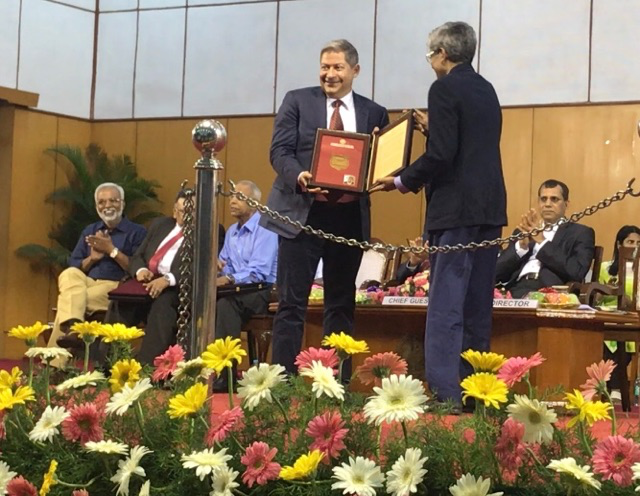
Noshir Contractor receives a Distinguished Alumnus Award
Noshir Contractor received a Distinguished Alumnus Award from the Indian Institute of Technology, Madras, where he received his undergraduate degree in Electrical Engineering in 1983. He received the award during IITM’s 59th Institute Day ceremonies held on April 26th, 2018. http://alumni.iitm.ac.in/daa/list.php?yr=2018
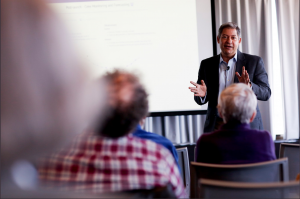
Noshir Contractor presents “Deep Space Teamwork” at CommFest 2018
Are we really going to Mars? The astronautical community certainly believes the answer is “yes.” Scientists all over the world are solving puzzles related to rocket reusability, human resistance to radiation exposure, and terraforming Mars to warm it up and give it a breathable atmosphere. The scientific challenges of a Mars mission are not confined to physical science and engineering. Once the rockets are built and tested, we will ultimately be sending human teams off to explore the galaxy. A central mission parameter for deep space exploration is teamwork. Communication Studies Professors Leslie DeChurch and Noshir Contractor are working with NASA to assemble and support inter-planetary dream teams. In this session, we will share the current plans for space travel and colonization, provide a behind the scenes look at how we are designing teams, and help you design dream teams back on Earth.
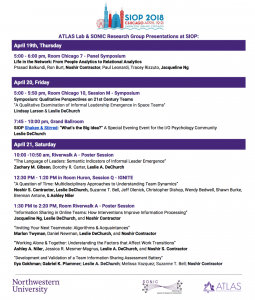
SONIC attends and presents at SIOP 2018
SONIC members present various projects throughout SIOP 2018:
| April 19th, Thursday |
| 5:00 – 6:00 pm, Room Chicago 7 – Panel Symposium
Life in the Network: From People Analytics to Relational Analytics Prasad Balkundi, Ron Burt, Noshir Contractor, Paul Leonardi, Tracey Rizzuto, Jacqueline Ng |
| April 20, Friday |
| 5:00 – 5:50 pm, Room Chicago 10, Session M – Symposium
Symposium: Qualitative Perspectives on 21st Century Teams “A Qualitative Examination of Informal Leadership Emergence in Space Teams” Lindsay Larson & Leslie DeChurch 7:45 – 10:00 pm, Grand Ballroom SIOP Shaken & Stirred: “What’s the Big Idea?” A Special Evening Event for the I/O Psychology Community Leslie DeChurch |
| April 21, Saturday |
| 10:00 -10:50 am, Riverwalk A – Poster Session
“The Language of Leaders: Semantic Indicators of Informal Leader Emergence” Zachary M. Gibson, Dorothy R. Carter, Leslie A. DeChurch |
| 12:30 PM – 1:20 PM in Room Huron, Session Q – IGNITE
“A Question of Time: Multidisciplinary Approaches to Understanding Team Dynamics” Noshir S. Contractor, Leslie DeChurch, Suzanne T. Bell, Jeff Olenick, Christopher Dishop, Wendy Bedwell, Shawn Burke, Brennan Antone, & Ashley Niler 1:30 PM to 2:20 PM, Room Riverwalk A – Poster Session “Information Sharing in Online Teams: How Interventions Improve Information Processing” Jacqueline Ng, Leslie DeChurch, and Noshir Contractor “Inviting Your Next Teammate: Algorithms & Acquaintances” Marlon Twyman, Daniel Newman, Leslie DeChurch, and Noshir Contractor “Working Alone & Together: Understanding the Factors that Affect Work Transitions” Ashley A. Niler, Jessica R. Mesmer-Magnus, Leslie A. DeChurch, and Noshir S. Contractor “Development and Validation of a Team Information Sharing Assessment Battery” Ilya Gokhman; Gabriel K. Plummer; Leslie A. DeChurch; Melissa Vazquez; Suzanne T. Bell; Noshir Contractor |
Noshir Contractor presents at the Institute for Policy Research Colloquium
Noshir Contractor presented on “Leveraging Computational Social Science to Address Grand Societal Challenges” on April 16, 2018.
The increased access to big data about social phenomena in general, and network data in particular, has been a windfall for social scientists. But these exciting opportunities must be accompanied with careful reflection on how big data can motivate new theories and methods. Using examples of his research in areas of disaster response, global health, scientific collaboration, and the mission to Mars, Contractor will argue that computational social science serves as the foundation to unleash the intellectual insights locked in big data. More importantly, he will illustrate how these insights offer social scientists in general, and social network scholars in particular, an unprecedented opportunity to engage more actively in monitoring, anticipating, and designing interventions to address grand societal challenges.
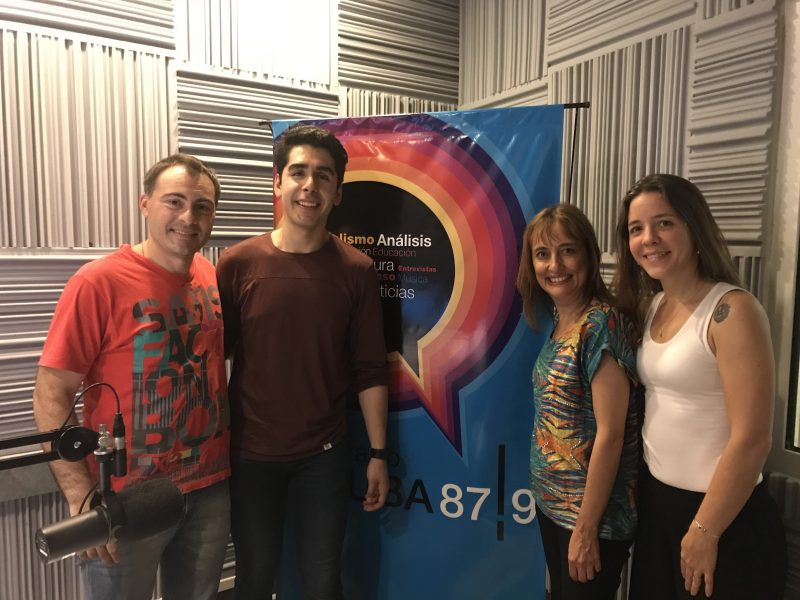
Diego Gómez-Zará and Silvia Andreoli shared MDT’s results at Radio UBA
The Ph.D. student, Diego Gómez-Zará, and the CITEP’s Director of Projects, Silvia Andreoli, presented the findings and results of the My Dream Team case study elaborated at the Universidad de Buenos Aires, Argentina. Both scholars were interviewed in the program “Académicamente” transmitted by the radio of the university. The objective of this program is to generate a space for sharing and diffusing research projects of the university. The interview was on April 10th.
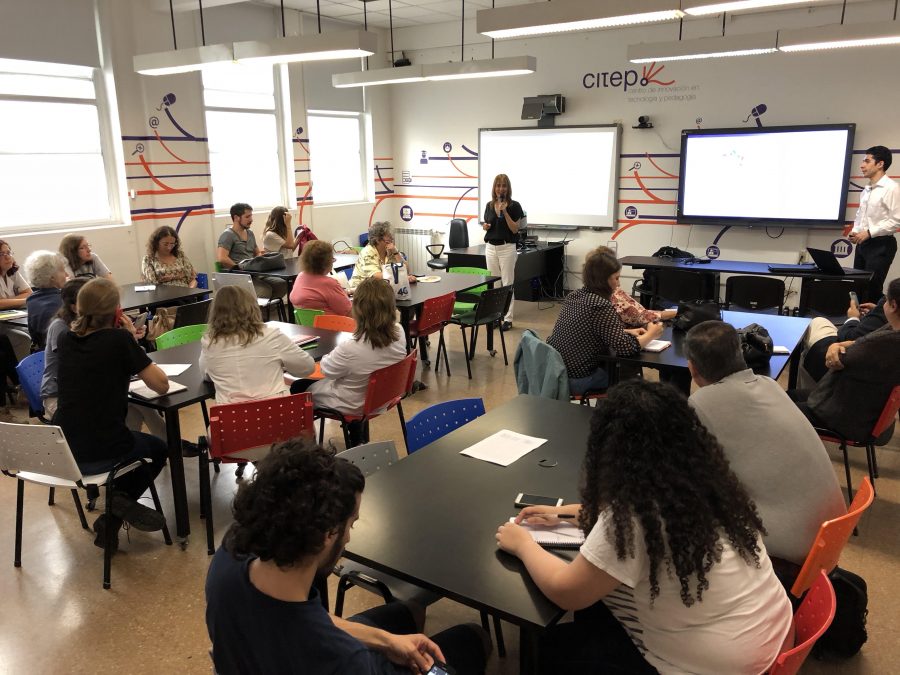
SONIC Lab presented the results of My Dream Team case study at CITEP, Argentina.
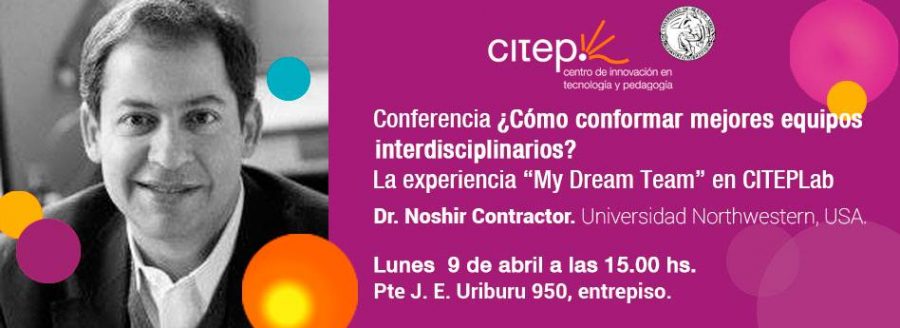
On April 9th, Professor Noshir Contractor and his Ph.D. student Diego Gómez-Zará presented the results of the team assembly case study conducted at the Center for Technological and Pedagogical Innovation (CITEP – Centro de Innovación en Tecnología y Pedagogía). The talk was given at the University of Buenos Aires in Buenos Aires, Argentina. Noshir and Diego presented how the participants of this academic program searched and invited others to assemble teams. The main results explain the relevant features for creating effective teams and demonstrate how My Dream Team –a web-based teaming search platform– facilitate the formation of teams in educational contexts.
Diego Gómez-Zará presents at INGroup 2018
Diego Gómez-Zará is going to attend the 13th Annual INGRoup Conference on July 18-22, in Washington, DC. He will present one of the My Dream Team project’s publications called “Social Cognition and Team Assembly: Competence, Warmth, or Embeddedness,” co-authored with Jacqueline Ng, Marlon Twyman, Silvia Andreoli, Leslie DeChurch, and Noshir Contractor.
Sid Jha and Matt Nicholson present at Northwestern Computational Research Day
Sid Jha will give a lightning talk “A Computational Platform to Evaluate the Ability to Perceive Social Connections” at the 2018 Computational Research Day on April 10, 2018. Moreover, Sid and Matt (both Undergraduate Research Assistants at SONIC) will present their posters then, respectively:
- Creating a Framework for Evaluating the Effectiveness of Various Search Strategies in the Small-World Phenomenon (by Matt)
- Network Acuity: Social Perceptions in a Small-World Experiment (by Sid)
Both abstracts and posters are available: http://computational-research-day.s3-website.us-east-2.amazonaws.com/posters/