
Our lab director, Dr. Noshir Contractor, is this year’s keynote speaker at Organizational Communication & Information Systems (OCIS) Plenary Session. He will speak on the topic “People Analytics: Understanding and Enabling the Future of Work.”
Kyosuke Tanaka presents at AoM in Boston
Our graduate student, Kyosuke Tanaka, is attending the 79th Annual Meeting of the Academy of Management at Boston from August 8th- August 13th to present his work on human information routing in communication network. He will unpack the phenomenon via an organizational perspective and further the current research through developing a novel framework by introducing human cognition. The work he is presenting will be informing his dissertation.
Citation:
Tanaka, K. (2019). Toward Understanding Human Information Routing in Group Communication Networks. Poster to be presented at the 79th Annual Meeting of the Academy of Management, Aug 8-13, Boston, MA, USA.
MDT paper published in Cuadernos.info
This study explores how and why scholars find collaborators using team formation systems. Based on theories of teams and human and social capital, we describe how scholars’ traits and social networks influence their team formation processes. We conducted a field study in Argentina in which 43 scholars used an online platform and assembled into eight interdisciplinary teams. Our results show that scholars initially tended to invite prior contacts connections, but eventually, they assembled cohesive interdisciplinary teams with members they did not know before. We conclude by reflecting on how team formation platforms can enable individuals to expand their social capital.
Citation: Gómez-Zará, D., Andreoli, S., DeChurch, L. A., & Contractor, N. S. (2019). Discovering collaborators online: Assembling interdisciplinary teams online at an Argentinian University. Cuadernos.Info, (44), 21-41. https://doi.org/10.7764/cdi.44.1575
Networks in the News – Latent Space Models for Cognitive Social Structures
A recent article by Daniel Sewell develops a new approach for Cognitive Social Structures (CSS) data. Although there have been several models for CSS, his latent space models better capture micro-structures of CSS and provide insights into respondents’ perceptions.
If you’re interested in the paper, it’s available: https://www.cambridge.org/core/journals/network-science/article/latent-space-models-for-network-perception-data/0D24F6D47F4FF81EE19AAC083DADEB35.
More press coverage for Mars Mission Research


Science Daily – “Weak spots for Mission to Mars revealed.”
The Times of India – “Weak spots for Nasa’s manned Mars mission revealed.”
New Atlas – “Simulated space journeys to help keep the peace on manned trips to Mars.”


 The Economist Babbage Podcast – “Joker AAAStrounauts.”
AAAS Annual Meeting – “Building a Winning Team for Missions to Mars.”

Tech2 – “NASA developing models to predict conflicts among crew members for manned Mars missions.”

Global Science – “Pensiero creativo e problem solving: gli umani sfidano Marte.”


EuropaPress – “Un modelo para predecir fallos psicológicos en el viaje a Marte.”
Space.com – “Astronauts Struggle with Finishing Tasks on Mock Space Missions.”
 Space.com – “Astronauts Struggle with Finishing Tasks on Mock Space Missions.”
CBC Radio – “It’s like a hall of mirrors: In a spacecraft, personalities work better than others.”
 CBC Radio – “It’s like a hall of mirrors: In a spacecraft, personalities work better than others.”
cnBeta.com – “西北大学开展模拟太空旅行计划 帮助宇航员更顺利抵达火星”

DigitalJournal.com – “Space agencies preparing for 3-year round-trip journey to Mars.”
rmf24.pl – “Lot na Marsa będzie jeszcze trudniejszy…”
The Daily Northwestern – “Northwestern professors build model for NASA Mars expedition.”

North by Northwestern – “On a mission to Mars, teamwork makes the dream work.”
The Times of India – “Mental health of Mars’ crew to be monitored.”
WBEZ – “Who Can Handle Trip To Mars? Northwestern Helps NASA Predict Strains On Astronauts.”

WBEZ 91.5 Chicago covers our Mars Mission Research
Website Link: https://www.wbez.org/shows/wbez-news/who-can-handle-trip-to-mars-northwestern-helps-nasa-predict-strains-on-astronauts/b4dbfec7-f2bc-4ea1-ba62-fa70dce4c592
The Times of India covers our Mars Mission research
Web link: https://timesofindia.indiatimes.com/city/chennai/mental-health-of-mars-crew-to-be-monitored/articleshow/69315211.cms
Gómez-Zará presents at CHI 2019
Citation
Diego Gómez-Zará, Matthew Paras, Marlon Twyman, Jacqueline N. Lane, Leslie A. DeChurch, and Noshir S. Contractor. 2019. Who Would You Like to Work With?: Use of Individual Characteristics and Social Networks in Team Formation Systems. In CHI Conference on Human Factors in Computing Systems Proceedings (CHI 2019), May 4–9, 2019, Glasgow, Scotland Uk. ACM, New York, NY, USA, 15 pages. https://doi.org/10.1145/3290605.3300889
Contractor Presents at the Advisory Committee to the Directors for Social, Behavioral, and Economic Sciences, NSF
Link to presentation.
Citation: Contractor, N. (2019, May). A Decadal Survey of the Behavioral and Social Sciences: A Research Agenda for Advancing Intelligence Analysis. Panelist at the Advisory Committee (AC) to the Directors for Social, Behavioral, and Economic Sciences (SBE) National Science Foundation, Alexandria, VA.
SONIC Speaker Series Presents: Céline Rozenblat
The SONIC Speaker Series presents
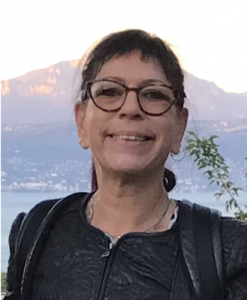
Céline Rozenblat
University of Lausanne (UNIL), Switzerland
A Multi-Level Network Perspective on Complex Urban Systems
SONIC Lab is proud to welcome Dr. Céline Rozenblat of the University of Lausanne. She will speak on Tuesday, May 21st at 10 am in Frances Searle Building, Room 1-483. Please contact Brent Hoagland with any questions.
 Abstract: In the context of knowledge and information societies, new tendencies in the long/medium term evolution of urban systems, together with new data and methods, require that existing theoretical assumptions and conceptualizations be challenged as global urban hierarchies are reconfigured. The connection between urban systems at different levels of organization becomes more and more relevant for understanding urban systems and their transformations. But the current inter-urban perspective is not sufficient to encompass these dynamics. Other cognitive, social, and institutional proximities in the innovation processes combine with spatial proximities. It leads us to consider cities in several dimensions of proximities in a multilayer perspective. The evolution of power distributions inside and between cities reshapes the world organization of central/peripheral cities and the complexity of the global urban system. Actors as multinational firms, or high-level innovation centers, participate actively in these reconfigurations that concentrate wealth, control, innovation, and attractiveness in a few cities. In the complexity of this multi-level system, how is regionalization of the world reshaping in a multipolar urban world? How does the multi-level perspective highlight some resilience properties? The methodologies derived from complex systems sciences bring new forms of intelligibility to worldwide urban dynamics.
Céline Rozenblat, is professor of Urban Geography at the University of Lausanne, Switzerland and president of the urban commission of the International Geographical Union (IGU). She studies systems of cities at European and world scales, multinational firm networks, inter-urban dynamics, comparative urban data, mapping and visualization of networks in geography, and spatial analysis. For several years she has worked on the relations between the evolution of multi-level urban processes and dynamics in city-system networks. To study these topics comparatively, she has built many databases on large European and worldwide cities and the networks they form. In particular, she has dealt since 1990 with databases on multinational firm networks and on city properties and evolution in a multi-dimensional and long temporal approach. Diachronic and dynamic studies supply materials to develop spatial and dynamic models and visualizations. She participated in European projects like ESPON FOCI 2008-2011, FP7 FET Insite (2011-2013) and Multiplex (2012-2016). She also participates to the EuropeAid project with China MEDIUM (2015-2019) on medium size cities in China and launched two projects LOGIICCS (FNS 2015-2018) and MEDIUM (SWISS-Conf. 2016-2018) on modeling Indian and Chinese cities’ integration in global networks of multinational firms and innovation.