Emily DeMarco of Inside Science reports that researchers from the the University of Delaware are fitting Delaware Bay tiger sharks with devices to track them during their southward migration. These researchers are interested in, not just where they go, but how the sharks interact with each other and other animals during their long swim.
The team implanted acoustics transceivers into 350 adult tiger sharks staring in 2012. They found that when the sharks migrate south, they become extremely dispersed into small male-dominated groups. However, when the sharks migrate back north to the Bay of Delaware, the network of sharks “fuses” back together with both male and female sharks mixing together again.
X
This data illustrates the social networks of sharks. The dispersion-fusion behavior they display is typically associated with higher-order mammalian species like dolphins and elephants. Evidence of this pattern in the Delaware population suggests that sharks could have more complex social networks than perviously conceived.
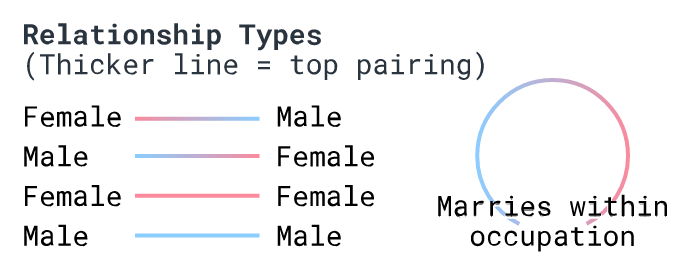
Adam Pearce and Dorothy Gambrell of Bloomberg Buisiness scanned data from the U.S. Census Bureau’s 2014 American Community Survey to maps the most common professional pairings across 3.5 million households. Their interactive highlights the five most common occupation/relationship matchups as well as the top male-male and female-female job matchups for each occupation within 435 professional silos. They note the divergent choices made by opposite genders in the same professions, some cliché and some quite surprising.
“An illustration of the relational event model to analyze group interaction processes” by lab members Noshir Contractor and Aaron Schecter and collaborators Andrew Pilny and Marshall Scott Poole was accepted for publication in the upcoming issue of Group Dynamics: Theory, Research, and Practice. The article applies relational event modeling to interaction processes and argues that “both emergent properties and performance are consequences of complex group interaction processes that happen in real time. As such, group process should not be treated as aggregations of interactions or simple psychological constructs.”
Full Citation:
Pilny, A., Schecter, A., Poole, M. S., & Contractor, N. (in press). An illustration of the relational event model to analyze group interaction processes. Group Dynamics: Theory, Research, and Practice.
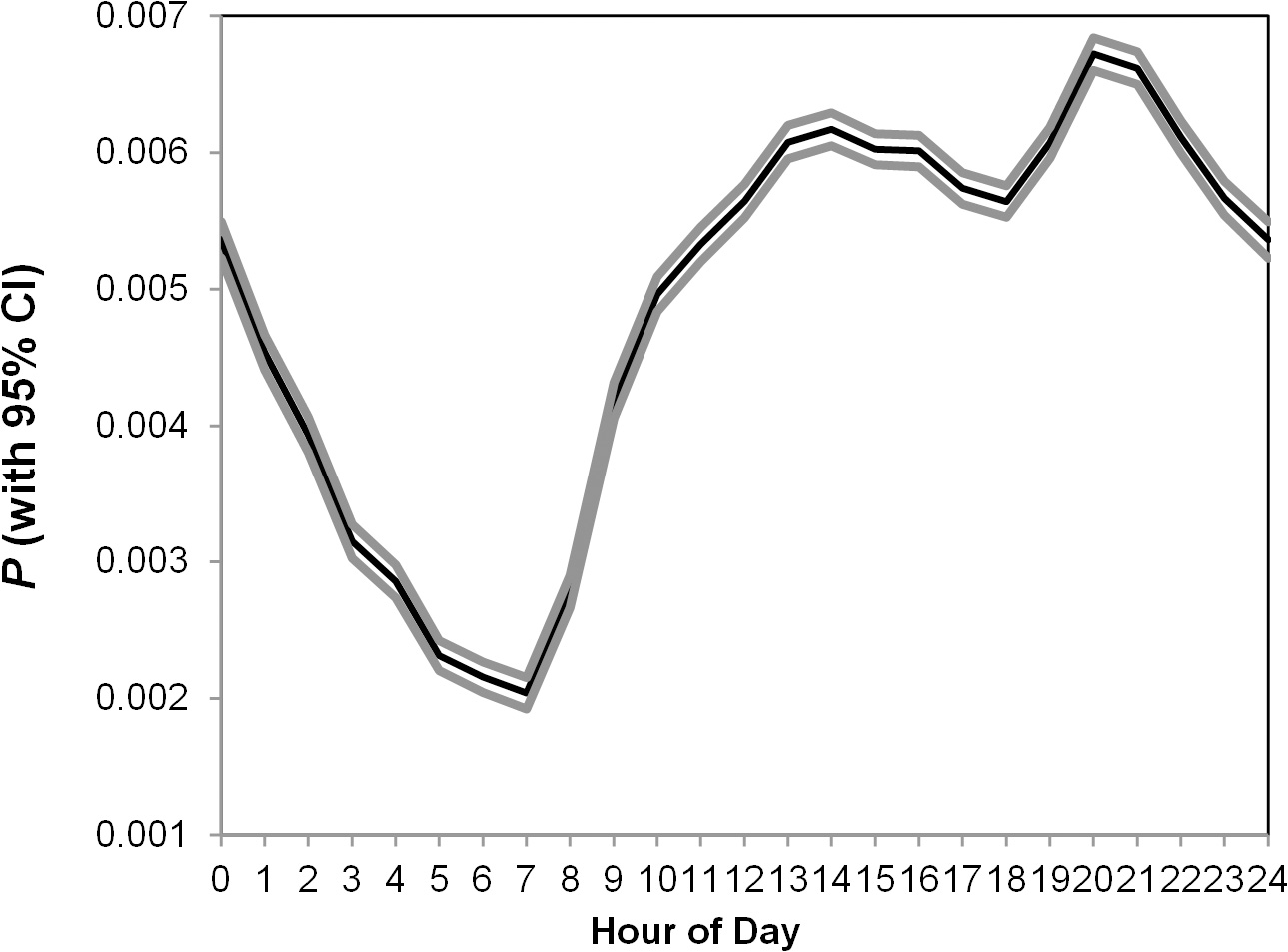
Along with collaborators Cheng Zhang, Chee Wei Phang, Ximeng Wang, and Yunjie Xu at Fudan University and Xiaohua Zeng at College of City University of Hong Kong, Noshir’s and Yun’s article “Circadian Rhythms in Socializing Propensity” was published in PLOS One on September 09, 2015.
Abstract: Using large-scale interaction data from a virtual world, we show that people’s propensity to socialize (forming new social connections) varies by hour of the day. We arrive at our results by longitudinally tracking people’s friend-adding activities in a virtual world. Specifically, we find that people are most likely to socialize during the evening, at approximately 8 p.m. and 12 a.m., and are least likely to do so in the morning, at approximately 8 a.m. Such patterns prevail on weekdays and weekends and are robust to variations in individual characteristics and geographical conditions.
Lab Director, Noshir Contractor, participated in the closing panel, “Reflections: Lessons learned,” for the 22nd Annual Organization Science Winter Conference: Innovations & Organizations on February 7th, 2016, alongside Natalya Vinokurova (Wharton), Todd Zenger (University of Utah), Martin Schulz (British Columbia at Vancouver).
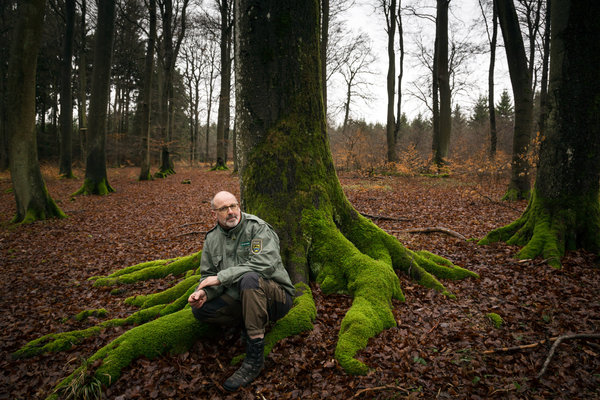
“When I say, ‘Trees suckle their children,’ everyone knows immediately what I mean.” PETER WOHLLEBEN GORDON WELTERS FOR THE NEW YORK TIMES
A recent New York Times article by Sally McGrane discusses the ecology put forth by German forester Peter Wohlleben in his recent book The Hidden Life of Trees: What They Feel, How They Communicate — Discoveries From a Secret World. Wohlleben’s writing is marked by the use of emotive language – e.g. “trees suckle their children” – to discuss the relationships of forest flora. His style of writing may be evocative, but Wholleben’s ideas are not novel. The book popularizes what environmental scientists have know for some time – that trees negotiate cohabitation through a system of chemicals, roots, and symbiotes that constitute what Wholleben terms the “wood wide web”. Paying attention to these networks might help us change the way we manage forests as a natural resource. Wholleben also hopes it will affect the way conceptualize nature in general if we see the complex communities of individuals rather than stands of ‘oxygen producing robots.’
SONIC Lab is proud to welcome Charles Macal who will present a talk on Tuesday, February 23rd, 2016 at 10:00 AM in Frances Searle Building, Room 1-483. All are welcome to attend. To schedule a one-on-one meeting with Dr. Macal please schedule a time HERE. Please contact Meghan McCarter with any questions or comments.
Senior Systems Engineer, Agonne Distinguished Fellow, Social & Behavioral Systems, Group Argonne National Lab
Simulating Chicago (and Everyone in It)
Abstract
chiSIM, the Chicago Social Interaction Model, is an agent-based model of people and places in Chicago along with the daily activities in which residents engage. To support planning and policy making, chiSIM models the behaviors and social interactions of all Chicago residents, represented in the model at the individual level. Places consist of geo-located parcels in the city, such as households, schools, workplaces, hospitals, and general quarters, such as nursing homes, dormitories, jails, etc. During the course of a simulated day, agents move from place to place, hour by hour, engaging in social activities and interactions with co-located agents. Examples of applications for this model include forecasting socially mediated processes, such as the spread of infectious diseases and the adoption of new technologies; measuring the potential effectiveness of public health and social programs and interventions; and assessing population-wide energy usage.
Biography
Charles Macal, PhD, PE, is Senior Systems Engineer, Argonne Distinguished Fellow, and Group Leader of the Social & Behavioral Systems Group within the Global Security Sciences Division of Argonne National Laboratory. Dr. Macal is recognized globally as a leader in the field of agent-based modeling and simulation and has led interdisciplinary research teams in developing innovative computer simulation models in application areas including global and regional energy markets, critical materials, electric power, healthcare and infectious diseases, environment and sustainability, and technology adoption. Dr. Macal holds Senior Fellow appointments at the Computation Institute (CI) of the University of Chicago and the Northwestern-Argonne Institute for Science and Engineering (NAISE). He received a Ph.D. in Industrial Engineering & Management Sciences from Northwestern University and holds an M.S. in Industrial Engineering and a B.S. in Engineering Sciences from Purdue University.
In a paper released in Royal Society Open Science, Robin Dunbar, a psychologist at Oxford University talks about the number of social relationships an individual can maintain. Known as the Dunbar’s number, 150 is the number of people an individual can maintain relationships with. Then the question of whether modern social media changes that number needs to be addressed. Dunbar surveyed 2,000 people (first national scale random sample study) of regular social media users and 1375 adults who may or may not use Facebook. Studies prove Dunbar’s number. Other numbers that came out of this testing was most people had 5 friends who they could turn for an emergency and 15 friends they call close friends. It gives more evidence to the theory that there is a cognitive limit on how much the brain can handle, despite Facebook’s ability to expand the network.
Lab Director Noshir Contractor presented his lecture “Leveraging Network Science to Address Grand Societal Challenges” on Jan. 15th, 2016 at the University of Michigan, Ann Arbor, sponsored jointly by the Interdisciplinary Committee on Organizational Studies (ICOS) and the Digital Future Lecture Series. Using examples of his research in the area of networks, Noshir illustrated how Network Science is fundamental to unleashing the intellectual insights locked in big data. Specifically, he discussed how these insights offer social scientists in general, and social network scholars in particular, an unprecedented opportunity to engage more actively in monitoring, anticipating and designing interventions to address grand societal challenges.