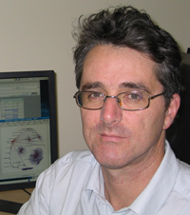
 On Friday, October 7, from 2:00-3:00 p.m. Australian National University Fellow, Robert Ackland will be giving a presentation in Room 1-483 of Frances Searle Building on the Northwestern University Evanston Campus.
This presentation provides an overview of empirical research into WWW hyperlink networks.
Social scientific research in this area is classified into three broad approaches, where hyperlink networks are studied as citation networks, issue networks and social networks, respectively. The disciplinary foundations, underlying assumptions and examples of research for each approach are discussed. The presentation then turns to available tools for conducting hyperlink network research, focusing on three particular tools that are associated with the above approaches: SocSciBot, Issuecrawler, and the Virtual Observatory for the Study of Online Networks (VOSON) which was created by the presenter. The three tools are compared in the context of a particular research exercise: constructing the hyperlink network of environmental activist organizations. This presentation concludes with a brief outline of the VOSON project.
Robert Ackland is a Fellow at the Australian National University, where he conducts empirical social science research into online social and organizational networks. He leads the VOSON project (http://voson.anu.edu.au), coordinates the ANU’s Master of Social Research programme and teaches on the social science of the Internet and online research methods. Robert has degrees in economics from the University of Melbourne, Yale University (where he was a Fulbright Scholar) and the ANU, where he gained his PhD in 2001.
Download the flyer here.
[line]
Comparing Webcrawlers for the Social Sciences
[line]


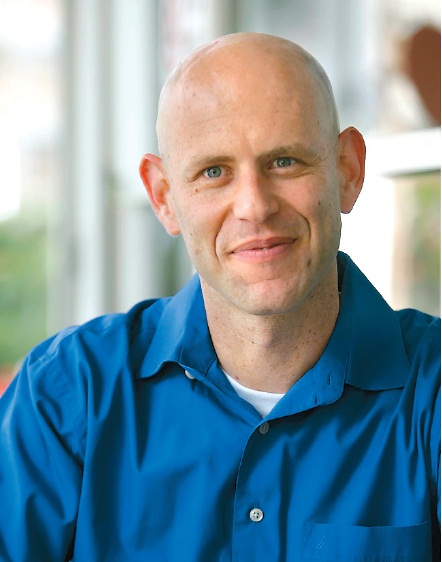 Visiting scholar Yuval Kalish will be presenting “Till Stress Do Us Part: Linking Communication networks, Stress and Voluntary Exit in Extreme Contexts” on Monday, August 29, 2011 10:30-11:30 a.m.